Introduction
"How much does it cost to build an app?"
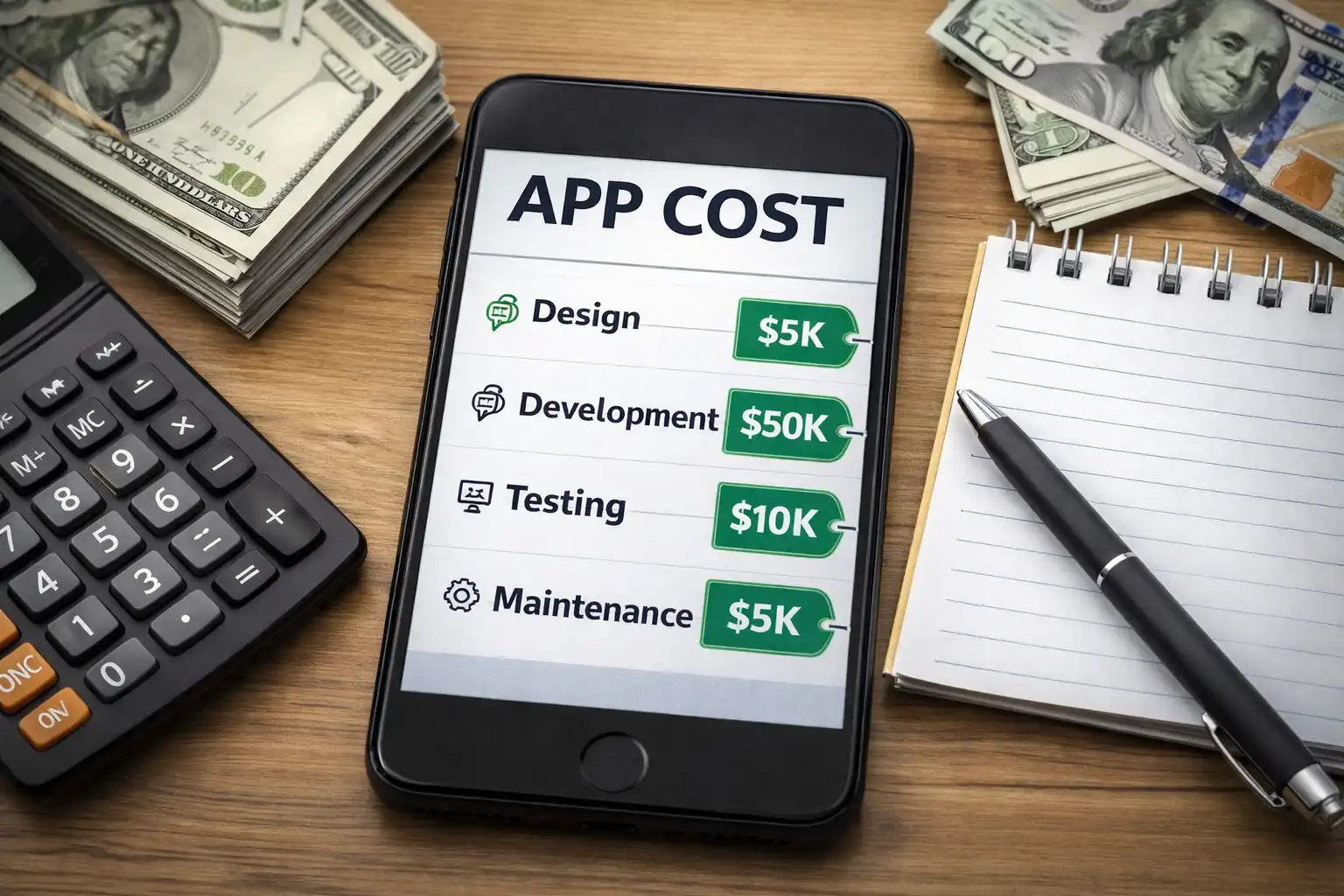
If you've asked this question, you've probably received answers ranging from $10,000 to $500,000. Both numbers can be accurate—it depends entirely on what you're building and how you're building it.
The mobile app development industry is notoriously opaque about pricing. Agencies have incentives to either lowball estimates to win deals or inflate them to maximize revenue. The result: founders enter projects without realistic expectations, leading to budget overruns, scope creep, and sometimes failed launches.
This guide provides honest, detailed cost breakdowns based on real-world project experience—so you can plan effectively and make informed decisions. We've built apps across all these price ranges, from MVP-stage startups to full-featured platforms like Gromo and Stellar Fate AI.
What Drives App Development Costs
Before looking at numbers, understand the factors that determine pricing:
1. Feature Complexity
A simple app with a few screens costs less than a feature-rich platform. The relationship isn't linear—complexity compounds. Every feature interacts with others, requiring additional testing, edge case handling, and potential refactoring.
2. Platform Strategy
Building for iOS, Android, or both significantly impacts cost:
- Single platform: 1x base cost
- Two native apps: 1.8-2x cost (not 2x due to shared backend and design)
- Cross-platform (React Native/Flutter): 1.2-1.4x cost for both platforms
3. Backend Requirements
Apps that only display content are simpler than those requiring:
- User accounts and authentication
- Real-time data synchronization
- Complex business logic
- Third-party integrations
- Admin dashboards
4. Design Expectations
A functional interface costs less than a polished, brand-aligned experience with custom animations and micro-interactions. Premium design typically adds 20-40% to development costs.
5. Team Location
Developer rates vary dramatically by geography:
- US/UK/Australia: $150-300/hour
- Western Europe: $100-200/hour
- Eastern Europe: $50-100/hour
- South Asia: $25-60/hour
Lower rates don't always mean lower quality, but they often mean different working practices, communication styles, and time zone challenges.
Cost Breakdown by App Type
Simple App ($15,000 - $50,000)
Characteristics:
- 5-10 screens
- Basic user authentication
- Simple database operations (CRUD)
- Minimal third-party integrations
- Standard UI components
- Single platform (iOS or Android)
Examples:
- Basic informational apps
- Simple utilities
- MVP versions of larger concepts
- Internal tools for small teams
Typical timeline: 6-12 weeks
What's included:
- UI/UX design
- Native or cross-platform development
- Basic backend/API
- App Store submission
- Basic testing
What's NOT included:
- Advanced analytics
- Push notification infrastructure
- Complex real-time features
- Ongoing maintenance
Medium Complexity App ($50,000 - $150,000)
Characteristics:
- 15-30 screens
- User accounts with profiles
- Payment processing
- Push notifications
- Third-party integrations (social login, analytics, etc.)
- Custom UI design
- Both iOS and Android
Examples:
- E-commerce apps
- Social networking apps
- Fitness/health tracking apps
- On-demand service apps (basic)
- Content platforms
Typical timeline: 3-6 months
What's included:
- Comprehensive UI/UX design with user research
- Cross-platform development
- Custom backend development
- Admin dashboard
- Payment integration
- Push notification system
- Comprehensive testing
- App Store optimization
Complex App ($150,000 - $500,000+)
Characteristics:
- 30+ screens
- Real-time features (chat, live updates)
- Advanced algorithms or AI/ML
- Multiple user roles with different permissions
- Complex integrations (ERP, custom APIs)
- Offline functionality
- High security requirements
- Scalable architecture
Examples:
- Fintech apps
- Healthcare platforms
- Marketplace apps
- Enterprise solutions
- Apps with AI features (recommendations, computer vision, etc.)
Typical timeline: 6-12+ months
What's included:
- Discovery and strategy phase
- Extensive UI/UX research and design
- Native or cross-platform development
- Scalable backend architecture
- AI/ML model integration
- Advanced security implementation
- Comprehensive testing and QA
- Performance optimization
- Launch support
Hidden Costs Most Estimates Miss
The development quote is just part of the picture. Budget for these often-overlooked expenses:
App Store Fees
- Apple Developer Program: $99/year
- Google Play Developer: $25 (one-time)
Ongoing Infrastructure
- Hosting: $50-500+/month depending on scale
- Database: $20-200+/month
- CDN/media storage: $50-500+/month
- Third-party services: Push notifications, email, SMS—often metered
Third-Party Services
Many features require paid services:
- Payment processing: Stripe/Braintree fees (2.9% + 30¢ typical)
- Maps: Google Maps API charges after free tier
- Communication: Twilio for SMS, SendGrid for email
- Analytics: Premium analytics platforms
Maintenance and Updates
Apps aren't "done" at launch. Budget 15-20% of initial development cost annually for:
- Bug fixes
- OS compatibility updates (new iOS/Android versions)
- Security patches
- Minor feature improvements
Marketing and User Acquisition
Building an app people don't know about is pointless. Budget for:
- App Store Optimization (ASO)
- Paid acquisition campaigns
- PR and content marketing
A common rule: marketing budget should equal or exceed development budget for consumer apps.
Native vs. Cross-Platform: True Cost Comparison
Native Development (iOS + Android)
Pros:
- Best performance
- Full access to platform features
- Platform-specific UX patterns
- Easier to find developers
Cons:
- Higher cost (two codebases)
- Longer development time
- Feature parity challenges
Best for:
- Performance-critical apps (games, video)
- Apps heavily using device features
- Well-funded teams prioritizing quality
Cost premium: 80-100% more than single platform
Cross-Platform (React Native / Flutter)
For a deep dive into cross-platform development, read our guide on Flutter for cross-platform development and optimizing Flutter UI/UX performance.
Pros:
- Single codebase for both platforms
- Faster development
- Easier maintenance
- Strong performance for most use cases
Cons:
- Occasional platform-specific issues
- Dependency on framework updates
- Some native features require "bridges"
Best for:
- Most business apps
- MVPs and early-stage startups
- Teams with web development experience
- Apps prioritizing time-to-market
Cost premium: 20-40% more than single platform (for both platforms)
Real Numbers Example
For a medium-complexity app:
| Approach | Development Cost | Maintenance/Year |
|---|---|---|
| iOS only (Swift) | $80,000 | $12,000 |
| Android only (Kotlin) | $75,000 | $11,000 |
| Both native | $140,000 | $21,000 |
| React Native (both) | $100,000 | $15,000 |
Cross-platform saves 25-30% upfront and ongoing.
How to Get Accurate Estimates
Provide Detailed Requirements
Vague requirements produce vague estimates. Before approaching developers, document:
- User roles: Who uses the app and what can each do?
- Core features: What must the MVP include?
- User flows: How do users accomplish key tasks?
- Integrations: What external systems must connect?
- Scale expectations: How many users, how much data?
Request Itemized Quotes
Ask for costs broken down by:
- Design
- Frontend development
- Backend development
- Third-party integrations
- Testing
- Project management
- Post-launch support
This reveals where estimates differ and helps identify potential scope gaps.
Understand Pricing Models
Fixed price: Defined scope for defined cost. Good for well-understood projects. Risk: scope creep leads to change orders.
Time and materials: Pay for actual hours worked. Good for evolving requirements. Risk: costs can exceed expectations.
Hybrid: Fixed price for defined phases, T&M for uncertain areas. Often the most practical approach.
Get Multiple Quotes
Three to five quotes reveal market rates and help identify outliers. Be wary of estimates significantly below market—they often indicate inexperience, offshore teams presented as local, or plans to upsell later.
Red Flags in Development Estimates
Watch for warning signs:
Estimates Without Discovery
Anyone who quotes a fixed price without understanding your requirements is guessing. Legitimate partners invest time understanding your needs before committing to numbers.
No Timeline
Cost without timeline is meaningless. A $50,000 project delivered in 3 months differs vastly from one taking 12 months.
Missing Categories
If testing, project management, or deployment aren't in the estimate, ask why. They're required for successful delivery—someone is paying for them.
Unusually Low Prices
If one quote is 50% below others, investigate. Common causes:
- Junior team or offshore subcontracting
- Underestimated scope (change orders coming)
- Missing requirements
- Unsustainable business model
Guaranteed Timelines
Software development involves uncertainty. Partners who guarantee delivery dates without contingency buffers are either inexperienced or not being honest.
How to Control Costs
Start with MVP
Build the minimum version that validates your concept. You can always add features—you can't easily remove wasted development.
Prioritize Ruthlessly
Not every feature deserves equal investment. Identify what truly differentiates your app and invest there. Standard features (login, settings, profiles) can use proven patterns.
Design Mobile-First
Don't design a desktop experience and try to shrink it. Mobile constraints often produce better designs and require less development.
Use Existing Solutions
Authentication, payments, analytics, push notifications—these are solved problems. Use established services rather than building custom implementations.
Plan for Iteration
Reserve 20-30% of your budget for post-launch improvements based on real user feedback. The first version is rarely correct.
Conclusion
Mobile app development costs range widely because apps vary wildly. A simple utility and a real-time marketplace with AI recommendations have little in common except running on phones.
Realistic budgets for serious apps:
- Simple app (one platform): $20,000-50,000
- Medium complexity (both platforms): $75,000-150,000
- Complex app: $150,000-500,000+
Add 20-30% for post-launch iteration and maintenance.
The best way to control costs is clarity—understanding what you're building, why each feature matters, and what success looks like. Vague requirements produce expensive surprises. Detailed planning produces predictable outcomes.
Find a development partner who asks hard questions, pushes back on unnecessary complexity, and helps you build the right thing—not just what you initially described. The cheapest option is rarely the best investment. The most expensive isn't either.
The right partner balances quality, timeline, and cost to deliver an app that serves your business goals. That's what app development costs should buy.
Want a realistic estimate for your app idea? Get in touch for a free consultation. We'll help you understand the true scope and cost before you commit. Explore our mobile app development services or see apps we've built like Gromo, PeerPicks, and Stellar Fate AI.